


Slip and fall accidents cost American hospitality businesses over $2 billion each year. For facility managers, the steady stream of guests and staff in busy hallways creates constant challenges in keeping everyone safe. Choosing the right non-slip mats is a practical way to prevent injuries while minimizing liability risks. This guide breaks down what durable non-slip mats offer for high-traffic areas and shows how smart selection and maintenance can make a lasting difference.
Table of Contents
- Defining Non Slip Mats For Hallways
- Top Varieties For Hospitality Environments
- Safety Features And Durability Standards
- Proper Installation And Maintenance Practices
- Reducing Liability And Meeting Legal Standards
Key Takeaways
| Point | Details |
|---|---|
| Non Slip Mats Enhance Safety | Non slip mats significantly reduce slip hazards in high-traffic areas, aiding in accident prevention. |
| Variety Matters | Different non slip mats are designed for specific applications within hospitality, such as entrance and anti-fatigue mats. |
| Maintenance is Key | Regular inspections and proactive maintenance are essential to ensure the mats preserve their safety features and performance. |
| Legal Compliance | Documenting installation, maintenance, and training helps reduce liability risks and ensures compliance with safety regulations. |
Defining Non Slip Mats for Hallways
Non slip mats are specialized floor coverings designed to provide enhanced traction and safety in high-traffic areas like hallways, particularly within hospitality settings. These mats are engineered to reduce slip-related hazards by creating a stable walking surface that minimizes the risk of accidents.
Typically constructed from rubber, vinyl, or synthetic materials, non slip mats feature specialized surface textures and backing systems that grip both the floor and footwear. Commercial floor coverings in hospitality environments must meet stringent safety standards, requiring mats that can withstand constant foot traffic while maintaining slip resistance. These mats often incorporate design elements like:
- Textured surfaces with microscopic grip patterns
- Raised surface configurations
- Water-channeling grooves
- High-friction backing materials
The primary function of non slip mats extends beyond simple floor covering. They serve critical safety purposes by controlling moisture, reducing potential slip zones, and creating visual indicators that alert individuals to potentially hazardous walking surfaces. Facility managers recognize these mats as essential risk management tools that help prevent workplace injuries and potential liability claims.
Pro Tip: Inspect non slip mats quarterly for wear patterns and replace them proactively to maintain optimal safety performance.
Top Varieties for Hospitality Environments
Hospitality environments require specialized non slip mats designed to address unique safety challenges and performance requirements. Floor mats help prevent slips and falls in high-traffic areas like hotel lobbies, restaurant kitchens, and conference centers where moisture and frequent foot traffic create potential hazards.
The most common varieties of non slip mats for hospitality settings include:
- Entrance Mats: Designed to trap moisture and dirt at building entrances
- Runner Mats: Long, narrow mats for corridors and walkways
- Anti-Fatigue Mats: Cushioned surfaces for areas where staff stand for extended periods
- Modular Safety Mats: Customizable sections that can be configured for specific spaces
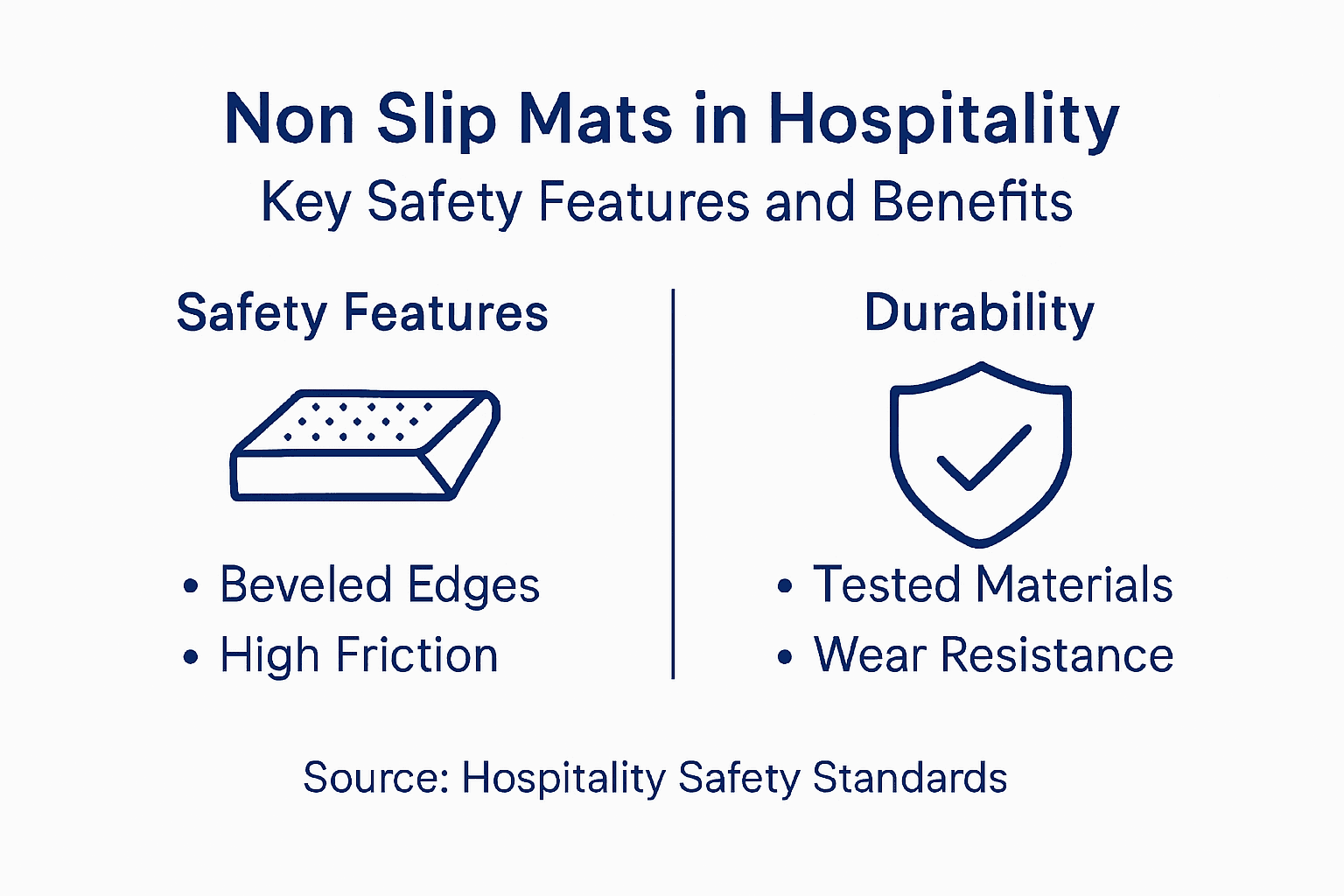
Each mat variety serves a specific purpose, with critical safety features like beveled edges, high-friction surfaces, and moisture-wicking capabilities. Facility managers must consider factors such as material durability, cleaning requirements, aesthetic compatibility, and specific environmental conditions when selecting appropriate non slip mat solutions for different hospitality zones.
Pro Tip: Rotate and inspect non slip mats monthly to ensure consistent performance and identify potential wear points before they become safety risks.
The following table summarizes how different varieties of non slip mats support specific hospitality needs:
| Mat Variety | Best Application Area | Unique Benefit |
|---|---|---|
| Entrance Mat | Lobby and entryways | Captures dirt and moisture |
| Runner Mat | Hallways and corridors | Provides continuous safety |
| Anti-Fatigue Mat | Staff workstations | Reduces fatigue and strain |
| Modular Safety Mat | Custom-shaped spaces | Adapts to fit any layout |
Safety Features and Durability Standards
Non slip mats in hospitality environments must meet rigorous safety and performance standards to protect staff and guests. Sustainable slip resistance is critical, ensuring that mats maintain their protective qualities throughout their entire lifecycle, even under challenging conditions like wet surfaces or frequent contamination.
Key safety features that define high-quality non slip mats include:
- Textured surface patterns that maximize friction
- Chemical-resistant materials
- Color contrast for enhanced visibility
- Beveled edges to prevent tripping
- Moisture-wicking capabilities
- Compliance with Underwriters Laboratories safety standards
Non slip mats designed for hospitality undergo extensive testing to ensure they can withstand harsh environments. Durability standards require these mats to resist chemical exposure, maintain structural integrity under constant foot traffic, and provide consistent slip resistance across various temperature and moisture conditions. Facility managers must prioritize mats that not only meet initial safety requirements but continue performing effectively throughout their operational lifetime.
Pro Tip: Request independent friction testing documentation when selecting non slip mats to verify their long-term performance and safety standards.
Proper Installation and Maintenance Practices
Successful non slip mat implementation in hospitality environments requires meticulous attention to installation and maintenance protocols. Strategic placement is crucial, focusing on high-risk areas such as entryways, kitchen zones, restrooms, and corridors where moisture and foot traffic create potential slip hazards.
Key installation guidelines include:
- Ensure complete surface contact with flooring
- Select mats with appropriate thickness for specific areas
- Use adhesive backing or non-slip underlayments
- Position mats to create minimal trip transitions
- Maintain color contrast for enhanced visibility
- Select mat sizes that fully cover high-risk walking zones
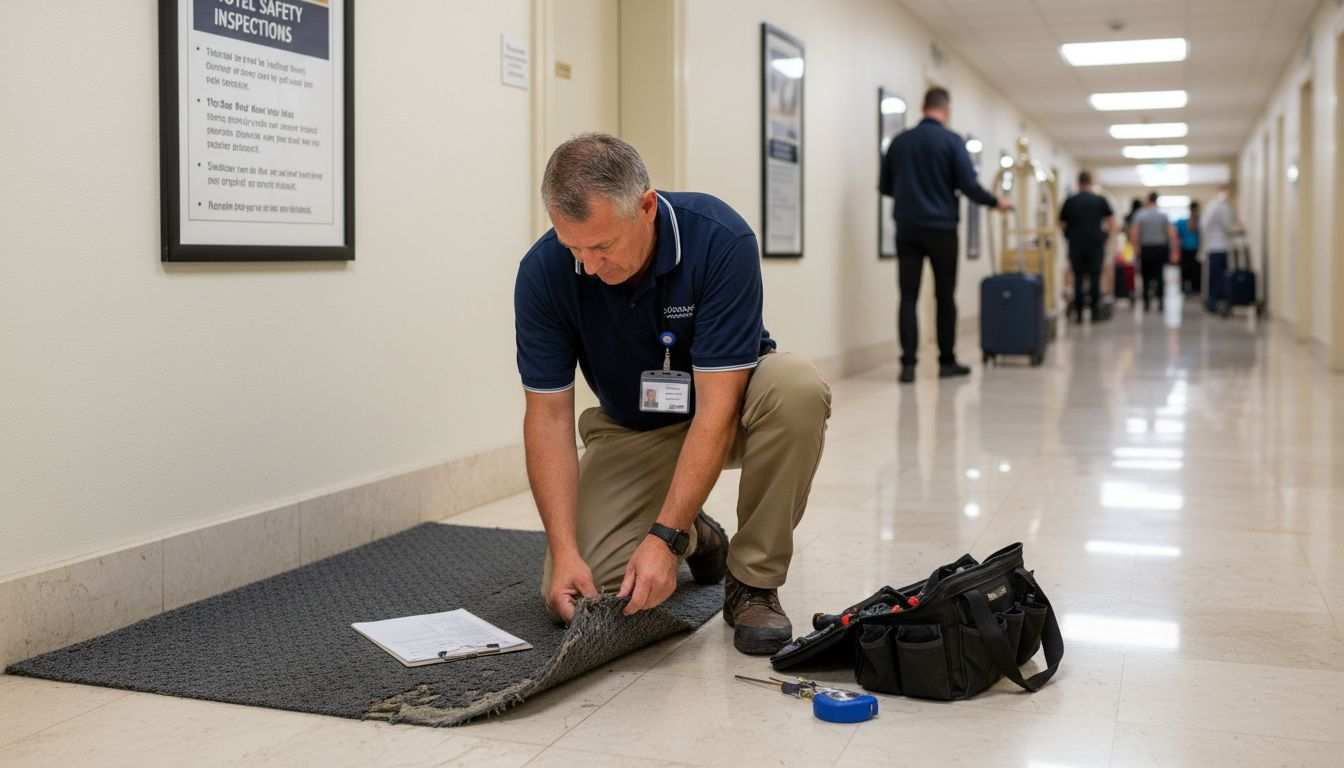
Regular maintenance is equally critical for preserving mat performance and safety. Facility managers should implement a comprehensive inspection routine that includes daily cleaning, weekly detailed assessments, and quarterly comprehensive evaluations. This approach helps identify potential wear, damage, or degradation that could compromise slip resistance and increase accident risks. Cleaning protocols should involve removing debris, washing with appropriate cleaning agents, and ensuring complete drying to maintain mat integrity.
Pro Tip: Develop a standardized mat inspection checklist to systematically track and document mat condition, creating a proactive safety management approach.
Reducing Liability and Meeting Legal Standards
Hospitality businesses face significant legal risks related to slip and fall accidents, making comprehensive risk management critical for protecting both guests and organizational assets. Hospitality law requires businesses to exercise reasonable care in preventing foreseeable hazards, with non slip mats serving as a key strategic intervention in demonstrating proactive safety measures.
Legal compliance and liability reduction strategies involve multiple components:
- Documenting mat installation and maintenance procedures
- Conducting regular safety inspections
- Maintaining detailed incident and repair records
- Implementing comprehensive staff training programs
- Selecting mats that meet industry safety standards
- Ensuring clear visibility and proper mat placement
Compliance risk management requires facility managers to systematically evaluate potential hazards and invest in preventative solutions. This approach involves weighing the costs of safety investments against potential legal exposure, with non slip mats representing a cost-effective method of reducing accident risks. Organizations must demonstrate due diligence by maintaining comprehensive documentation, conducting regular assessments, and maintaining a proactive approach to safety management.
Pro Tip: Create a comprehensive safety log tracking mat condition, maintenance activities, and inspection dates to provide robust documentation in potential legal proceedings.
Below is a reference table outlining key actions required for legal compliance in mat safety management:
| Compliance Action | Purpose | Documentation Required |
|---|---|---|
| Regular Inspections | Identify safety hazards early | Inspection checklists |
| Maintenance Records | Track repairs and replacements | Dated maintenance logs |
| Staff Training | Ensure proper use and awareness | Training attendance sheets |
| Incident Tracking | Document accidents for liability | Detailed incident reports |
Enhance Hallway Safety with Reliable Non Slip Mats from Mats4U
Navigating the risks of slippery hallways in hospitality demands more than basic floor coverings. The key is finding durable mats that provide sustained slip resistance and moisture control while supporting heavy foot traffic in busy environments. As the article highlights, features like textured surfaces, beveled edges, and moisture-wicking capabilities are essential to reducing accident hazards and meeting legal safety standards.
At Mats4U.com, we specialize in commercial-grade solutions designed to tackle these exact challenges. Explore our extensive selection of Commercial Mats crafted for high-traffic zones including hallways, entryways, and workstations. Our mats combine durability, slip resistance, and ease of maintenance to help protect your staff and guests from falls. Plus, discover complementary Indoor Mats and Accessories that enhance safety and performance.
Take control of your hospitality safety today by choosing mats proven to reduce liability and enhance traction. Visit Mats4U.com now to find the perfect non slip mat solutions tailored to your facility’s needs and ensure safer hallways starting immediately.
Frequently Asked Questions
What are non slip mats and how do they improve safety in hallways?
Non slip mats are specialized floor coverings designed to provide enhanced traction and safety in high-traffic areas like hallways, significantly reducing the risk of slip-related accidents.
What are the common types of non slip mats used in hospitality environments?
The most common types include entrance mats for trapping dirt and moisture, runner mats for corridors, anti-fatigue mats for workstations, and modular safety mats for custom-shaped areas.
How should non slip mats be maintained for optimal performance?
To maintain non slip mats, implement daily cleaning, conduct weekly detailed assessments, and perform quarterly comprehensive evaluations to identify wear, damage, or degradation.
What safety features should I look for in high-quality non slip mats?
High-quality non slip mats should have textured surface patterns for maximum friction, chemical-resistant materials, color contrast for visibility, beveled edges to prevent tripping, and moisture-wicking capabilities.
Recommended
- Understanding Floor Mats for Hallways: Importance and Benefits – Mats4U USA
- Understanding Non Slip Restaurant Mats for Safety – Mats4U USA
- Commercial Non Slip Floor Mats: Reducing Liability Risks – Mats4U USA
- How to Install and Maintain a Kitchen Slip Mat for Safety – Mats4U USA
- How to Make Guests Feel Welcome at Home – FunLifeNow


