


TL;DR:
- Properly engineered anti-fatigue mats can reduce worker fatigue by up to 54 percent.
- Anti-fatigue mats promote micro-movements that improve circulation and reduce muscle fatigue, unlike comfort mats.
- Investing in quality anti-fatigue mats yields significant safety, health, and cost savings over time.
Most facility managers assume any floor mat reduces worker fatigue. That assumption is costing facilities real money. Fatigue reduction up to 54% is achievable with properly engineered anti-fatigue mats, yet many procurement decisions still default to cheaper comfort mats that deliver a fraction of that benefit. The difference between these two mat categories affects worker health, injury rates, absenteeism, and long-term safety compliance. This guide breaks down the engineering, the data, and the selection criteria you need to make the right call for every workstation in your facility.
Table of Contents
- What makes anti-fatigue and comfort mats different?
- Measurable benefits: Worker wellness, fatigue, and injury reduction
- Material, thickness, and design: How to select the right mat
- When a comfort mat is (and isn’t) enough: Edge cases and hybrid solutions
- Why the ‘any mat is better than none’ myth still costs facilities dearly
- Anti-fatigue solutions tailored for your facility
- Frequently asked questions
Key Takeaways
| Point | Details |
|---|---|
| Anti-fatigue mats actively reduce fatigue | Engineered micro-movement and rebound features cut lower limb fatigue by up to 54% for standing workers. |
| Material and thickness matter most | The right choice depends on the environment, with rubber, polyurethane, or gel providing varying durability and comfort. |
| ROI beats upfront cost | Investing in the correct anti-fatigue matting can lower injuries, improve morale, and pay for itself within a year. |
| Comfort mats have limits | They offer basic cushioning but lack the proven fatigue-reducing benefits of advanced anti-fatigue designs. |
What makes anti-fatigue and comfort mats different?
The terms get used interchangeably, but they describe two distinct product categories with very different engineering goals. Understanding that distinction is the first step toward smarter procurement.
Comfort mats are designed primarily to cushion the foot. They soften the contact surface and reduce pressure on the sole, which helps during brief standing periods. They do not, however, actively engage the body’s circulatory or muscular systems.
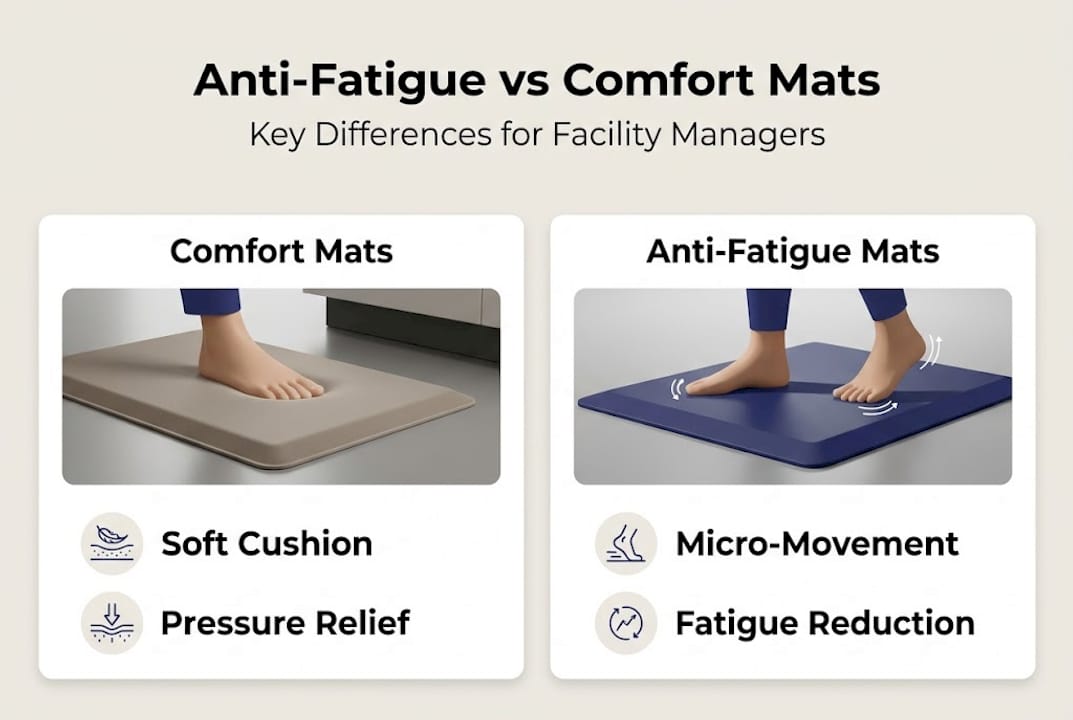
Anti-fatigue mats are a different category entirely. Anti-fatigue mats reduce physical strain from prolonged standing by promoting micro-movements that improve blood circulation, redistribute pressure, and reduce muscle fatigue. The mat surface is engineered to create subtle instability, which keeps leg and calf muscles in constant low-level contraction. That movement pumps blood back toward the heart, preventing the pooling that causes fatigue and swelling.
This distinction matters when you look at the anti-fatigue vs regular mats comparison side by side:
| Feature | Anti-fatigue mat | Comfort mat |
|---|---|---|
| Primary function | Fatigue reduction via micro-movement | Cushioning and pressure relief |
| Engineering | Engineered rebound and density | Soft foam or gel padding |
| Circulation benefit | Yes, active | Minimal |
| Suitable shift length | Long shifts, 4+ hours | Short to medium standing |
| Typical materials | Nitrile rubber, polyurethane, gel | PVC foam, basic rubber |
| Beveled safety edges | Standard on quality models | Variable |
The anti-fatigue mat benefits that matter most in commercial settings include:
- Reduced lower limb muscle fatigue during extended standing
- Improved venous blood return, lowering swelling risk
- Decreased spinal compression from static posture
- Lower incidence of musculoskeletal complaints over time
- Reduced slip and trip hazards when beveled edges are present
“Anti-fatigue mats reduce fatigue by up to 54%” is not a marketing claim. It is an OSHA-cited finding based on controlled workplace studies, and it applies specifically to engineered anti-fatigue products, not generic comfort mats.
Comfort mats do serve a purpose. For reception desks, short-duration retail counters, or low-traffic areas, they provide adequate relief. But they are not a substitute for anti-fatigue engineering in workstations where employees stand for four or more hours per shift. Treating them as equivalent is where facilities lose both safety compliance and worker wellness ROI.
Measurable benefits: Worker wellness, fatigue, and injury reduction
With the differences spelled out, let’s look at what the data says about real workplace outcomes when you choose anti-fatigue mats.
Anti-fatigue mats reduce worker fatigue by up to 54% and measurably cut musculoskeletal pain in standing workstations. That is not a marginal improvement. For facilities running two or three shifts, that number translates directly into reduced absenteeism, fewer workers’ compensation claims, and higher sustained productivity.
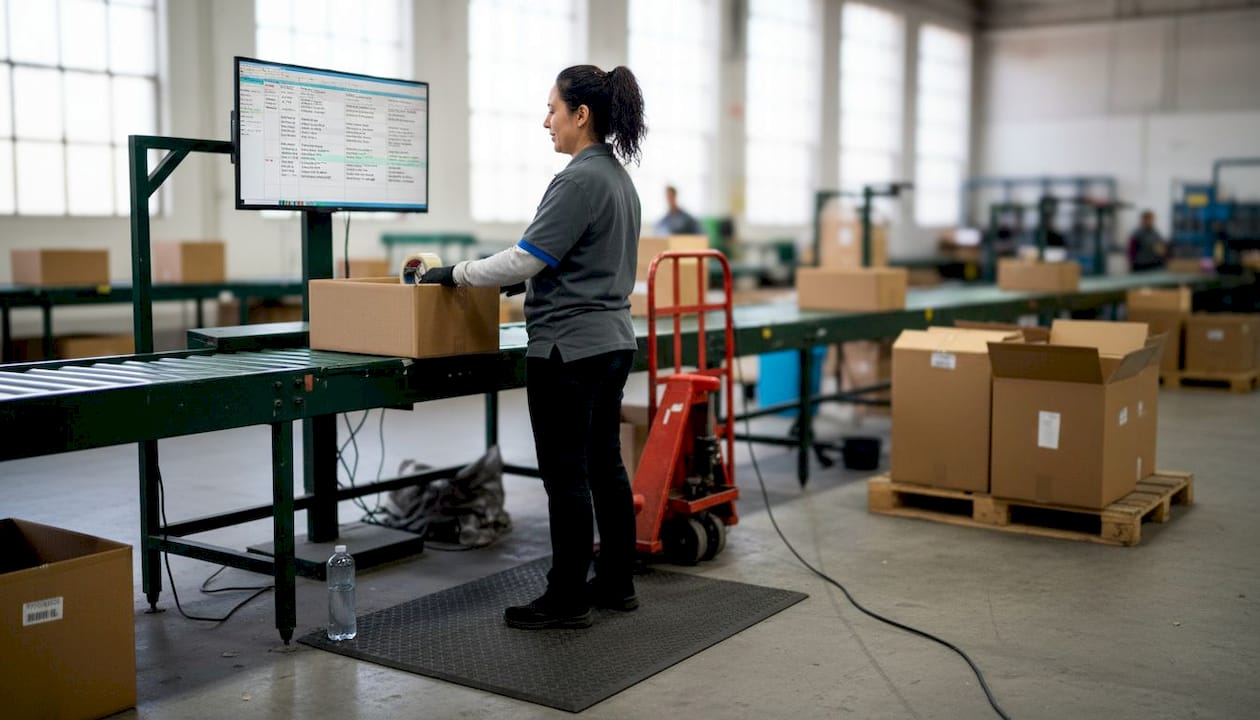
The impact goes beyond comfort. Workers who experience less end-of-shift fatigue report higher morale and lower intent to leave their roles. Turnover in physically demanding jobs is expensive, and flooring is one of the lowest-cost interventions available to address it.
| Outcome metric | Hard floor | Comfort mat | Anti-fatigue mat |
|---|---|---|---|
| Lower limb fatigue reduction | Baseline | 10-20% | Up to 54% |
| Musculoskeletal complaint rate | High | Moderate | Significantly reduced |
| Slip/impact injury risk | High | Moderate | Low (nitrile rubber) |
| Worker satisfaction score | Low | Moderate | High |
Here is how the benefits stack up when you implement anti-fatigue mats correctly:
- Reduced fatigue accumulation across the shift, not just at the start
- Lower musculoskeletal injury rates, particularly in the lower back, knees, and ankles
- Decreased slip and fall incidents with proper anti-slip surface textures
- Improved worker focus due to reduced physical distraction from discomfort
- Lower long-term healthcare and compensation costs tied to standing-related injuries
One statistic stands out for procurement decisions: nitrile rubber reduces impact injuries by 50 to 70 percent compared to hard floor surfaces. That single data point justifies the price difference between a basic comfort mat and a quality anti-fatigue product in most industrial or food service environments.
Facility managers evaluating anti-fatigue mat uses across different departments should also reference OSHA standards for anti-fatigue mats to confirm compliance requirements for specific workstation types. In regulated environments, documented mat specifications may be required during safety audits. Commercial kitchen testing data further confirms that anti-fatigue mats outperform comfort mats on every measurable wellness metric in high-demand standing environments.
Material, thickness, and design: How to select the right mat
Knowing the impact you can expect, here is how to identify the best mat for your facility’s unique demands.
Optimal mat thickness is 3/8 to 1 inch, and material selection should match the environment directly. Rubber suits industrial and wet areas. Polyurethane delivers soft cushioning for dry, office-adjacent settings. Gel mats serve premium comfort zones where workers need maximum relief without heavy-duty durability requirements.
Durability is a procurement variable that often gets underweighted. Rubber mats last 10 or more years under heavy use. Polyurethane models typically perform well for 3 to 5 years. PVC foam lacks durability compared to nitrile rubber and is prone to compression over time, which eliminates the rebound effect that makes anti-fatigue mats work. Custom-fit mats also eliminate the edge gaps and curling that create trip hazards.
One of the most persistent anti-fatigue mat myths is that thicker always means better. It does not. A mat that is too thick creates instability, increases trip risk at the edges, and can actually cause more weight-shifting discomfort. Density and rebound are the performance variables that matter. A firm, well-engineered mat with proper rebound outperforms a soft, thick foam pad every time.
Selection criteria by use case:
- Industrial floors: Nitrile rubber, drainage holes if wet, beveled edges, minimum 1/2 inch thickness
- Commercial kitchens: Grease-resistant rubber, anti-slip surface texture, drainage design, easy-clean surface
- Retail and office: Polyurethane or gel, aesthetic finish options, moderate thickness, beveled edges
- Wet areas: Rubber with drainage, check anti-fatigue mats for wet areas for specific specs
- Heavy industrial: Consult the industrial anti-fatigue mat guide for load-rated options
Pro Tip: Before committing to a bulk order, request sample mats and test rebound by pressing your thumb firmly into the surface. It should resist compression and return quickly. Also verify beveled edges on all four sides. Flat edges are a trip hazard that negates safety compliance efforts. Review anti-fatigue mat selection tips before finalizing specs for wet or slippery environments.
For ROI calculation, factor in mat lifespan against the cost of one workers’ compensation claim. In most facilities, a single injury claim exceeds the cost of outfitting an entire department with quality anti-fatigue mats.
When a comfort mat is (and isn’t) enough: Edge cases and hybrid solutions
Material and design are not the only variables. Function and context dictate when each mat type is appropriate, and when advanced solutions are needed.
Comfort mats are a reasonable choice in specific, limited scenarios:
- Standing periods under 60 to 90 minutes per shift
- Low-risk environments with no wet, greasy, or heavy-impact surfaces
- Budget-constrained situations where anti-fatigue mats are being phased in over time
- Areas where workers alternate between sitting and standing frequently
Outside those conditions, comfort mats carry real risks. They can create a false sense of compliance, particularly in OSHA-sensitive environments. Worn comfort mats curl at edges, creating trip hazards. Soft mats without proper rebound can actually increase discomfort because overly soft mats increase weight-shifting frequency, leading to more fatigue rather than less. That is a counter-intuitive finding that procurement teams rarely account for.
Hybrid mats solve a specific problem. In commercial kitchens, wet processing areas, and food service environments, you need both anti-fatigue cushioning and anti-slip surface performance. Hybrid designs combine engineered rebound with drainage channels and textured surfaces to address both hazards simultaneously. Runner anti-fatigue mats are a practical hybrid format for long workstation lines and assembly areas.
For a balanced view of tradeoffs, the anti-fatigue mat pros and cons resource covers scenarios where even quality anti-fatigue mats have limitations.
Pro Tip: Comfort mats should never replace scheduled movement breaks or ergonomic rotation policies. Mats reduce fatigue accumulation, but they do not eliminate it. Build break schedules and mat deployment as complementary interventions, not alternatives to each other.
In any workstation where OSHA ergonomic guidelines apply or where shifts exceed four hours of standing, defaulting to comfort-only mats is a compliance and liability risk.
Why the ‘any mat is better than none’ myth still costs facilities dearly
We see this pattern repeatedly. A facility manager needs to address a standing workstation complaint. The fastest solution is a bulk order of low-cost comfort mats. The problem appears solved. Six months later, the injury rates have not moved, absenteeism is unchanged, and workers are still complaining.
The issue is that matting gets treated as a compliance checkbox rather than a performance investment. When you prioritize anti-fatigue over generic comfort mats in standing workstations, the measurable wellness and safety ROI becomes clear within one budget cycle. Reduced fatigue means fewer errors. Fewer injuries mean lower compensation costs. Lower turnover means reduced hiring and training expense.
The facilities that get this right are the ones that calculate total cost of ownership, not just unit price. A $40 comfort mat replaced every 18 months costs more over five years than a $120 nitrile rubber anti-fatigue mat that lasts a decade and delivers verified fatigue reduction. The ergonomic flooring benefits compound over time in ways that a simple price comparison never captures.
Defaulting to the lowest price without matching mat engineering to environment is the single most common procurement mistake we observe. Fix the specification first, then optimize cost within that specification.
Anti-fatigue solutions tailored for your facility
If you are ready to move from comfort mats to verified anti-fatigue performance, Mats4U.com offers a full range of solutions matched to facility type and workstation demand. The Comfort Premier Anti-Fatigue Mat is a top-rated option for dry commercial and office environments, delivering engineered rebound with a professional finish. For food service, industrial, and wet-area applications, the Comfort Flow Anti-Fatigue Mat combines rubber durability with drainage design and anti-slip surface texture. Custom sizes, logo options, and specialty configurations are available for retail and branded environments. Free delivery applies on orders over $100, and all products are Made in the USA.
Frequently asked questions
Are anti-fatigue mats really better than comfort mats for long standing jobs?
Yes. Anti-fatigue mats promote micro-movements that actively reduce lower limb fatigue and improve circulation, delivering up to 54% fatigue reduction that comfort mats cannot match.
How do I know which anti-fatigue mat material fits my environment?
Rubber is the best choice for industrial and wet areas, polyurethane works well for dry light-duty settings, and gel suits premium comfort needs. Material and thickness vary based on durability requirements and shift length.
Is it true that a thicker mat is always safer or more effective?
No. Optimal thickness is 3/8 to 1 inch, and exceeding that range can increase trip risk and reduce rebound performance. Density and surface engineering matter more than raw thickness.
Do I need to replace comfort mats with anti-fatigue mats in every area?
Not always. Comfort mats are acceptable for short-duration standing, but in workstations with prolonged standing, hybrid and anti-fatigue designs consistently outperform comfort-only options on every measurable safety and wellness metric.
Recommended
- Best Anti-Fatigue Mats for Facility Managers – Expert Comparison 2025 – Mats4U USA
- Comfort Premier™ Mat - Anti-Fatigue, Hygienic, Durable Workplace Solution – Mats4U USA
- Comfort Flow™ Anti-Fatigue Drainage Mat for Safe, Comfortable Workspaces – Mats4U USA
- Anti Fatigue Runner Mats: Boosting Workplace Comfort – Mats4U USA


